


Education and Training Courses
Education and training courses for keeping up with the clinical, technical, and practice-related developments in medical imaging. Many of these courses provide Continuing Education credits to help fulfill your certification requirements.
Search tips: Search using multiple keywords. Use quotation marks to search for an exact word or phrase (i.e. "x-ray beam filters"). Use an asterisk "*" to do a wildcard search and fill in the blank at the end of a word or phrase (i.e. masses*).
Filter by:
Webinar
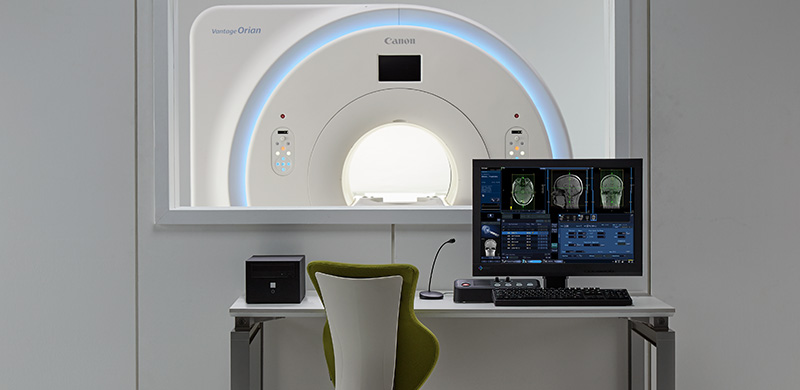
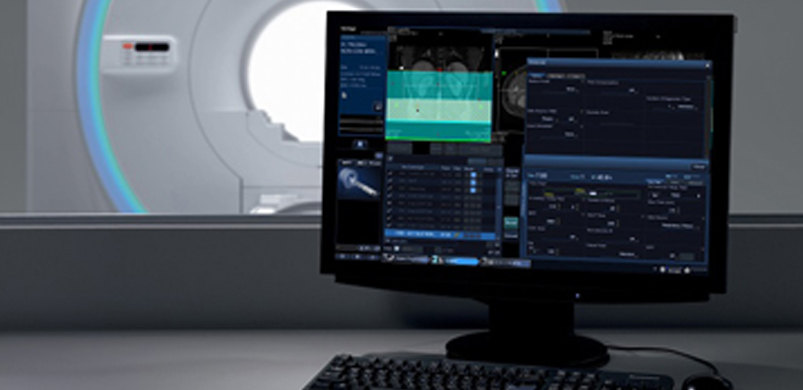
Introduction to the Canon MRI Interface
MRM3600W
Course Type: Webinar
Cost: $20.00
Course Length: 8 Hrs
Credits: 1
Credit Type: CE
This webinar discusses the awareness of Staffing shortages and new hire training becoming a challenge in recent years for the medical community. The objective of this presentation is to familiarize the MR user interface to a Technologist new to the Canon system in providing a session on how to scan a basic brain. It covers the start to finish process of scanning a patient and sending the data to a PACS system. It includes covering the registration process [on how to pull studies from the RIS system, or how to manually enter the patient data]. Cover how to pull protocols developed for your site. Demonstrate how to set up the head coil onto the MRI system. Perform patient set-up into the head coil. Cover the Control Panel on how to move the patient in and out of the MR system. Discuss how to setup the slices in commonly used sequences in Scan Plan and how and when to start the scanner. Demonstrate how to Display the data. Show how to send the data to PACS. Cover the final step on how to end the exam. After enrolling, please use the to find the Launch button. Click the Launch button to complete step 2 of your registration. Need assistance? Contact us at mylearningadmin@us.medical.canon
Webinar
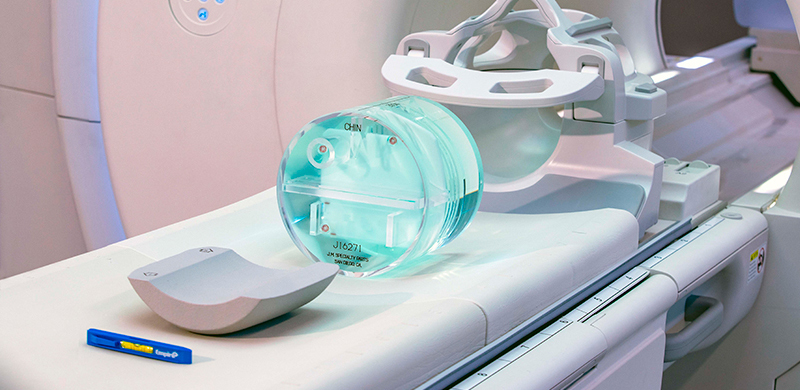
MR ACR Phantom Troubleshooting Webinar
MRM3500W
Course Type: Webinar
Cost: $20.00
Course Length: 1 Hr
Credits: 1
Credit Type: CE
The American College of Radiology (ACR) Accreditation is recognized as the gold standard in medical imaging. By displaying the gold seals of ACR Accreditation, you demonstrate to your patients, payers and referring physicians that you are committed to providing the safest and best quality care possible.In preparing to image the ACR phantom, the ACR has given 8 tests to evaluate a system’s performance. This training covers some of the more common troubleshooting scenarios a site may encounter when submitting their data.The objective of this troubleshooting presentation is to discuss what is the purpose of the ACR. Talk about the phantom that will be used for acquiring the data. Review which coil is to be used when scanning the ACR Phantom. How to setup the phantom in the coil and cover what actions to take to ensure the coil and phantom are both set up properly. What to avoid. Lastly post scanning measurements and how to discern if the system will fail a section and pointers to determine if it’s a user, system, or an environmental problem.Use the link in your enrollment confirmation email to access the webinar. A link will also become available on this page at the designated start time. Join as a Guest and enter your first and last name in order to receive credit for attending.Click the button below to find the Launch button to join the webinar at the designated start time.** DO NOT use Internet Explorer. To view the technical specifications/ requirements to attend this webinar, please go to https://helpx.adobe.com/adobe-connect/tech-specs.htmlNeed assistance? Contact us at mylearningadmin@us.medical.canon
Webinar
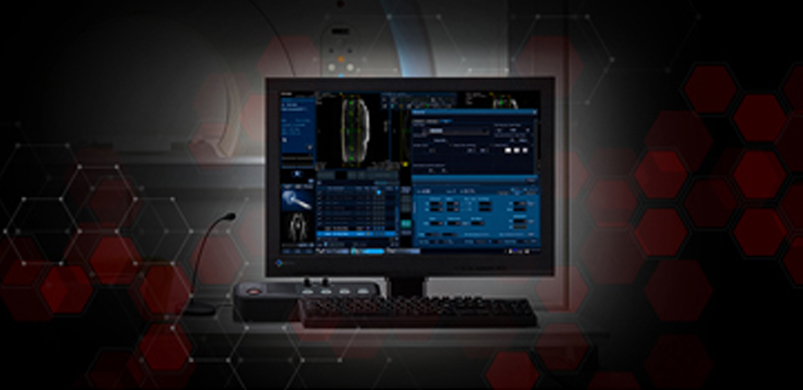
Peripheral Arteries Non-Contrast MRA FS-FBI Webinar
MRM3300W
Course Type: Webinar
Cost: $20.00
Course Length: 1 Hr
Credits: 1
Credit Type: CE
In this presentation we will be discussing Canon’s third generation non-contrast MRA technique of the peripheral arteries called FS-FBI, or Flow Spoiled Fresh Blood Imaging.Flow-Spoiled FBI (FS-FBI) is an advanced type of FBI that can depict arteries and veins separately, even for vessels with low blood flow velocity. This technique is a 3DFASE sequence utilizing ECG gating to acquire the patient’s peak systole and peak diastole points in their cardiac cycle and acquires them both in the same sequence. FS-FBI adds an optimal dephasing pulse to the gradient field in the readout direction of the base FBI sequence. This dephasing pulse suppresses the signals from low-velocity arterial blood flowing in the readout direction and thus enhances the difference in the signal levels of arterial blood imaged in the systolic and diastolic phases.FS-FBI can be applied to multiple regions of the body to evaluate arterial and venous flow. Specializing in large FOV coverage and slower flowing blood vessels as seen in the lower legs and the feet. It is best suited in blood vessels that mainly flow in parallel directions versus multiple directions.The objectives of this presentation is to train the user on the principles of FS-FBI, how to set up the patient and coils within the MRI magnet, narration of the cardiac lead set-up, ECG-gated sequence used for imaging peripheral arteries, proper planning of the imaging volume, demonstrate the ease of use for Delay Tracker, as well as a basic understanding of the Dephase pulse values and how to troubleshoot and adjust according to the patient’s condition.Use the link in your enrollment confirmation email to access the webinar. A link will also become available on this page at the designated start time. Enter your first and last name in order to receive credit for attending. Prepare for your classroom: If not already installed, you may download and install the Adobe Connect application from below for a better classroom experience: https://www.adobe.com/go/Connectsetup ---------- Get a quick overview: http://www.adobe.com/products/adobeconnect.html
Webinar
Renal Non-Contrast MRA Time-SLIP Webinar
MRM3200W
Course Type: Webinar
Cost: $25.00
Course Length: 1 Hr 25 Mins
Credits: 1.25
Credit Type: CE
In this presentation we will be discussing Canon’s third generation non-contrast MRA technique of the renal arteries called Time-SLIP, or Time-Spatial Labeling Inversion Pulse. This technique is an arterial spin labeling variant (aka: ASL), combined with a respiratory-gated 3DSSFP technique, that uses the actual blood to be imaged as its own tracer, instead of injecting patients with a contrast agent. The blood vessels of interest, as in this presentation the renal arteries, are visualized in detail by the selective tagging of the blood and using a BBTI (Black Blood TI) value for the proper timing of the imaging volume. Time-SLIPs versatility is manifested in its applicability to many regions of the body to evaluate both hemodynamic properties and visualization of vascular structures, especially in regions where vessels are oriented in multiple directions, such as the renal arteries. The objectives of this presentation is to train the user on the principles of Time-SLIP, how to set up the patient and coils within the MRI magnet, description of the respiratory-gated sequence used for imaging the renal arteries, proper planning of the imaging volume and tag pulses, as well as a basic understanding of the BBTI values and how to troubleshoot and adjust according to the patient’s condition.

Webinar
Cybersecurity in Healthcare
MED1600W
Course Type: Webinar
Cost: $20.00
Course Length: 1 Hr
Credits: 1
Credit Type: CE
The impact of cyber threats on healthcare organizations goes beyond compromising patient care. It can result in financial losses, reputational damage, erosion of patient trust, and potential legal consequences. Protecting data and internal networks is a must for healthcare organizations. This webinar will define and review prominent cyber threats that target healthcare organizations as well as explain how cybersecurity solutions and policies can protect these organizations.
